Illustrative image
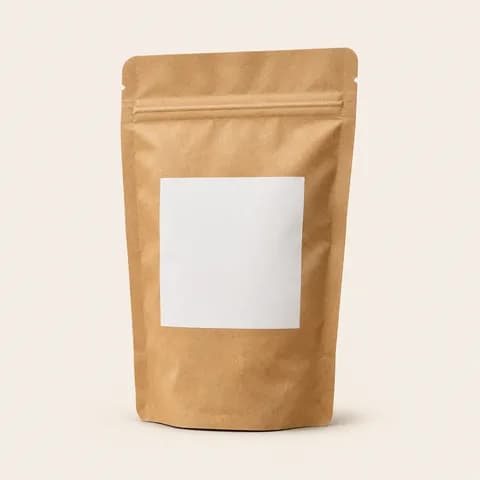
Stand-up pouch
When to choose it
It stands on the shelf and has a zip closure. It is our main format.
When not to choose it
When you need a portion below 50 g.
Clients most often ask us about the format, label and packaging cost. This guide gives answers from our projects. Choose a product and we will show the packaging we select for it.
Illustrative image
It stands on the shelf and has a zip closure. It is our main format.
When you need a portion below 50 g.
Illustrative image
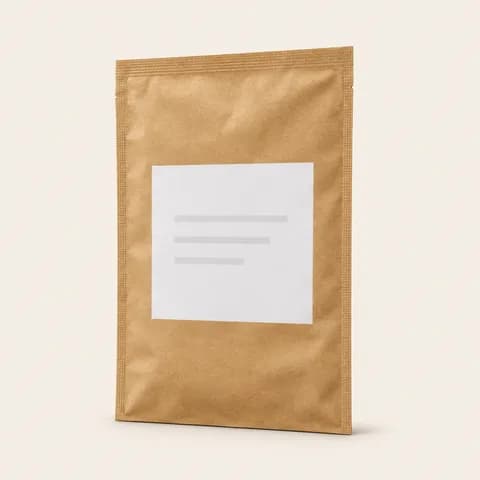
It is flat and has no base. It suits portions and sets. It uses the same materials as a stand-up pouch.
When the customer needs to close the pack after opening: a sachet without a zip cannot do this.
Illustrative image
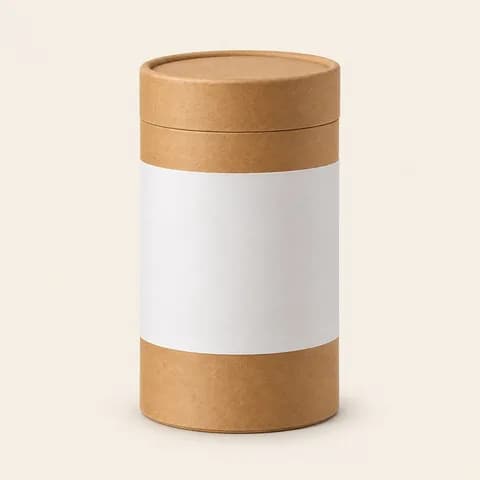
It is a cardboard tube with a membrane and lid. An unusual fill weight needs a made-to-measure tube.
When the product needs a confirmed barrier: we select the tube barrier individually.
A barrier addresses specific product needs. Compare protection from oxygen, moisture and light.
| Material | Oxygen | Moisture | Light |
|---|---|---|---|
| Paper with PP film | low | medium | — |
| Metallised layer | high | high | protects |
| Aluminium layer | highest | highest | protects |
| Mono-PE with an EVOH layer | high | medium | — |
| Transparent PP/PET/PE laminate | high | — | does not protect (transparent) |
We have used a metallised layer for tea, erythritol, instant drinks and freeze-dried fruit.
We have used an aluminium layer for xylitol and sticky dried fruit.
For salt, an inner PE layer separates the product from aluminium. We confirm the selection for each project.
Manufacturer data sheets are illustrative. We confirm the selection against a technical data sheet before the project.
We choose the size from a product sample or bulk density.
State the fill weight for each variant.
We only make flow wrap, a bag sealed from film on a reel, after a conversation. Our daily work uses ready-made stand-up pouches and sachets.
We do not pack into big bags. Choose a standard format.
Sticks and small sachets are available on request, for larger runs.
We do not pack single-serve infusion bags or pyramids.
You order and pay for packaging directly with the manufacturer. We help select it and point you to a vetted manufacturer.
The packaging manufacturer provides the food-contact declaration of compliance and technical data sheet.
Return to the product brief. If you are unsure, select “Advise me” for packaging.
Describe your product in the product creator