Co-packing: what it is and how it works
Co-packing is the service of weighing and packing finished food products into retail units under a client's brand, with no production line of your own. We pack dry goods: coffee, tea, superfoods and spices, from 300 units.
Co-packing, contract packing, private label and white label
These are names for the same process seen from different angles. Contract packing is often called co-packing, and manufacturing under someone else's brand is called private label or white label. In every variant the product reaches the market under your logo, and we take care of weighing, packing and a compliant label.
What the service includes
- What we pack
- coffee, tea, superfoods, spices (dry goods)
- Packaging
- doypack, sachet, cardboard tube
- Minimum order
- from 300 units
- Label
- compliant with EU food law (ingredients, allergens, nutrition)
How the process works
You tell us what to pack
The product, the fill weight, how many pouches to start with. Got a recipe? We work with yours.
Goods and packaging
You send your own, or we source them for you. We match the doypack to the product.
We pack and label
Weighing, sealing, label applied. We make the label or use yours.
You collect the finished product
For the shelf, the online store or your community. We can also build gift sets from them.
What we pack
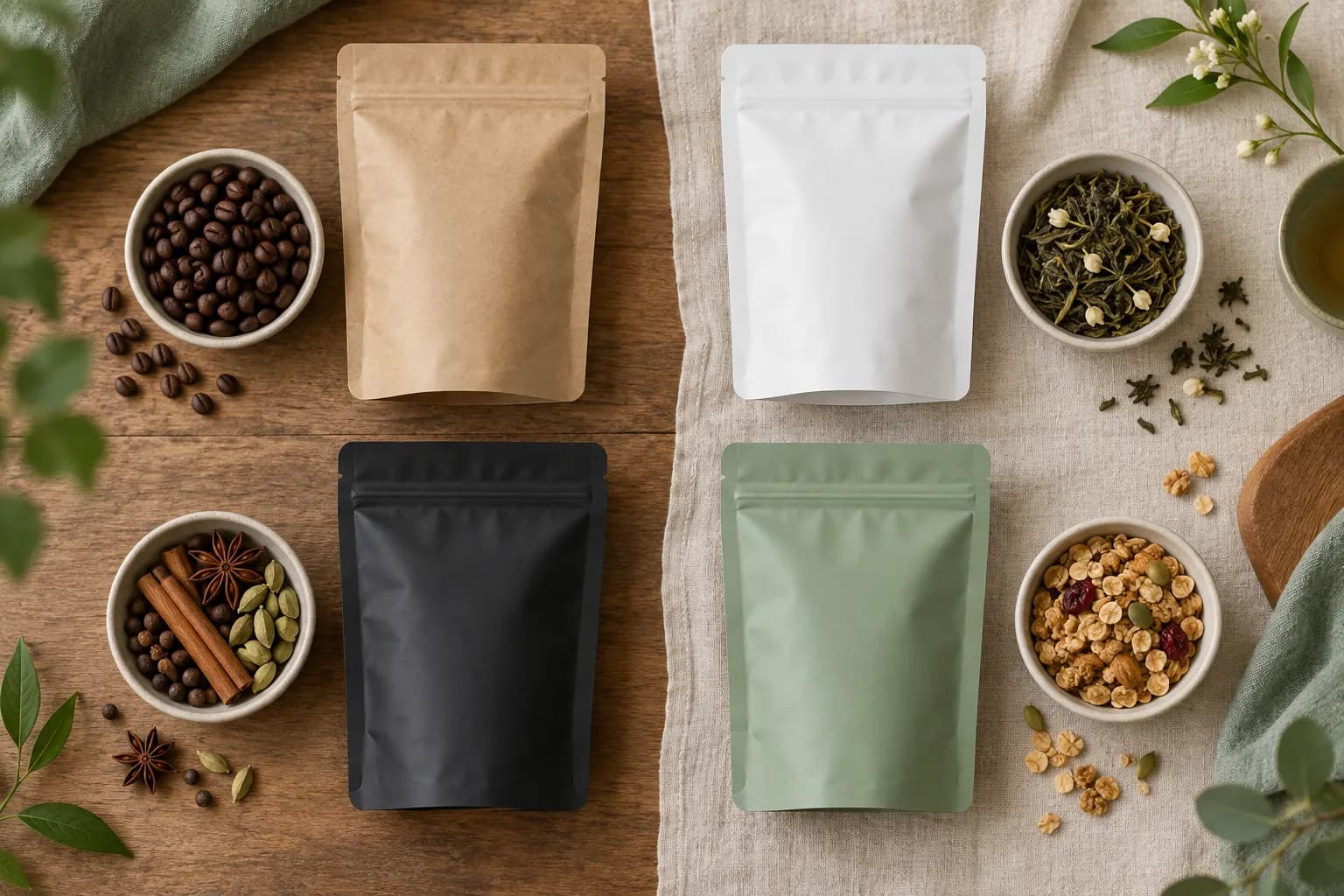
Each category has its own page with scope and examples.
When co-packing pays off
When you want to sell a product under your own brand but do not want to buy a packing line, rent a hall or hire people to weigh goods. At 300 units a line of your own does not pay for itself, and outsourcing the packing lets you test the product on the market before investing in production.
When to outsource co-packing, and when not to
It does not pay off for everyone, and it is better to know that before the conversation than after the first batch.
Outsource if
- you want to test the product on the market before buying a machine — at one batch a month your own line stands idle most of the time
- you have customers but no facility, no team and no appetite for food law
- your product is dry, free-flowing and stable at room temperature
- you need several variants in small runs rather than one in a large run
Do not outsource if
- you pack daily and in a single format — then your own line pays back faster than a service
- your product needs refrigeration or pasteurisation
- it is a food supplement or an extract — a separately regulated category we do not handle
- you sell into a retail chain that requires IFS or BRCGS certification up front
What to ask every supplier, including us
Exactly what the quoted price covers and what it does not — the outer carton and the pallet often sit on different sides of that line.
What the minimum order is in units rather than kilograms — a few hundred kilograms of goods is several thousand packs at 100 g.
What happens to the line between batches: who cleans it, how often, and what about allergens from the previous job.
What the plant actually runs on, and whether that dosing principle suits your product.
Which documents you get with the batch, and whether they let you trace which goods it was made from.
Which certificates the plant holds and whether they are current — a claim is not enough, ask for the document.
The last point applies to us too: we run a HACCP system but hold no IFS or BRCGS certification. If your buyer requires one, say so at the start — we are not the right partner then, and you are better off knowing immediately.
Frequently asked questions
What does co-packing mean?
Weighing and packing a finished product into retail units under the client's brand. The client receives a product ready for sale, with no packing line of their own.
How is co-packing different from manufacturing?
Manufacturing creates the product. Co-packing takes a finished product and gives it retail form: weighs it, packs it and labels it.
Is contract packing the same thing?
Yes. Contract packing and co-packing describe the same arrangement: packing to order, under the client's brand.
What is the minimum order?
Scoop & Pack's MOQ is 300 units per variant, meaning one product at one fill weight. Each variant is a separate batch, and we clean and set up the full line before every batch.
Do I have to supply the goods myself?
No. You can send your own goods or Scoop & Pack can order them from a supplier. You buy at the supplier's purchase price and the supplier invoices you; we do not keep a warehouse of ready-made products.
Who is responsible for the label?
The business whose brand appears on the product is responsible for the label content. Scoop & Pack checks your artwork for the required elements free of charge and can prepare the graphic design for a separate fee.
Can you pack a product that requires an unusual process, such as modified-atmosphere packaging?
We select equipment for each order and may invest in additional equipment when the project makes business sense. Refrigeration and pasteurisation remain outside our offer.
Price your product
Set your product up in the creator. We come back with an individual offer within 3 working days.
Configure your product in the creator